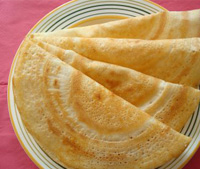
Dosa
Ingredients
1 cup white basmati rice
1 cup split yellow mung beans
1 1/4 cup fresh water
1/2 tsp salt
1/2 tsp coriander powder (optional)
1/2 tsp fenugreek powder (optional - my addition:)
coconut oil for frying
Using a large mixing bowl and fine mesh sieve, wash and strain the rice and the mung beans twice or until the water runs clear. Transfer the rice and mung beans to a 4-quart saucepan or mixing bowl. Cover the mixture with fresh water and soad for at least 6 hours or overnight. After the soaking period, strain and rinse the rice and mung beans.
Next, grind the rice and mung beans. If using a large food processor, put all the rice and beans in the processor bowl, add the water, salt, coriander and fenugreek and grind on high for 5 minutes (moi je met 3 minutes.... il est très bruyant mon robo-culinaire). If using a blender, put half of the water and about half of the rice and beans in the blender carafe and blend on high for 1 minute. Then gradually add more of the rice and beans until the mixture becomes like pancake batter, blending on high for at least 3 minutes. If your blender gets hot, stop. You may have to process the recipe in two batches. (avec le robot culinaire.... tout est fait d'un coup... 3 minutes).
Return the batter to a bowl or saucepan, cover with a towel, and leave it somewhere warm to ferment for 8-12 hours or overnight. If you live in a cool climate, putting it on top of the fridge or in the oven (with the light on, but don't turn the oven on) will work.
Fermentation will make the batter rise in the bowl (le mien il ne lève pas d'diable.... mais il est bon quand même). The more the dough ferments, the lighter and fluffier the dosa.
Warm a ceramic nonstick frying pan over medium heat and use 1/2 tsp coconut oil per dosa (or a spray coconut oil) in the pan. Flick a few drops of water on the pan's surface; when the water sizzles the pan is ready. Cook the dosa as you would a pancake. (Moi je les mets le plus mince possible) Pour 1/3 cup of the dosa batter into the pan. Tilt and rotate the pan to spread the batter out evenly. If your batter is very thick, use the back of a large spoon to spread it in circles until the dosa is thin.
When the dosa bubbles and the edges start to come away from the plan, check to see that the bottom is nice and brown. It's done. (moi je cuit sur l'autre côté un peu aussi) If you like your dosa crisp, flip it and cook a few minutes more. Each dosa takes about 5 minutes. (Je garde les dosa dans mon "toaster oven" à 200F jusqu'à ce que je sois prête à les manger).
Every culture has its crepe, pancake, tortilla, or flatbread. India gives us the gift of dosa, which bears most resemblance to France's crepe. Dosa is traditionally served with a spicy soup and chutney. This flatbread is most often made with polished or parboiled white rice and split urad dal, which is a hulled pigeon pea. This recipe calls for split mung dal and white basmati rice; both are light and dry in quality yet grounding and nourishing when soaked, cooked, and served warm. Adventurous cooks may replace the mung dal with urad dal, which is highly nutritive and heavier, making it a great variation for cooler weather.
From "The Everyday Ayurveda Cookbook" Kate O'Donnell